
Blue Book
Sustainability
Report
2026
contents
Welcome
Sustainability at Triple Point
Our approach
Understand the challenges
Lead by example
Pick the best assets
Business Outcomes
People
Climate and nature
Community
Governance
Strategy Outcomes
Private Credit
Energy Transition & Clean Heat
Ventures
Looking Ahead
Appendix
Welcome
Message from our Managing Partners
Welcome to Triple Point’s 2026 Blue Book, our annual report on the sustainability activities of our business and investments , covering 1 July 2025 to 30 June 2026.
This is our fourth report. Each one gives us a clearer view of our performance and a firmer basis for deciding where to focus next.

Ben Beaton Managing Partner
James Cranmer Managing Partner
Why sustainability matters to us
Unlocking financial ambition with curiosity and character is our purpose at Triple Point.
We pursue sustainable practices because we believe they make us better at what we exist to do. Curiosity encourages us to look beyond the obvious numbers and consider the wider impact of the capital we invest. Understanding how our decisions connect investor outcomes, society and the environment helps us make better-informed judgements, recognise risks, and identify opportunities for lasting value.
Character is just as important. For us it’s about doing what we say, taking the long-term view and being open about where we can do better.
We know that trust is earned every day, through how we behave and the performance we deliver. Responsible investment is part of both.
Welcome
We continue to operate against a backdrop of real turbulence, in the UK and globally
The turbulence we described in last year’s report has deepened rather than eased. UK and global markets continue to grapple with political uncertainty, shifting regulation and sustained economic pressure.
In conditions like these, it is natural to ask whether every part of what we do still earns its place. We ask that question of our sustainability work as rigorously as of anything else. Our answer remains yes, because it continues to serve our mission and the clients who rely on us.
Our purpose does not change with the economic weather, and neither should the disciplines that help us deliver it. Clients and colleagues look to us for consistency when the wider picture is anything but consistent. We aim to provide it by staying focused on what matters for their long-term outcomes.
Our climate work and B Corp recertification
We integrate sustainability into our investment decisions and the way we operate because we believe it is in the best interests of our clients and the long-term security of their wealth. It helps us identify sources of value and risk that might otherwise be overlooked, which is why it is integral to our investment approach.
This year we completed a re-baselining of our emissions and submitted new targets to the Net Zero Asset Managers (NZAM) initiative. Our Sustainability Group reviewed our continued membership, as we review all such commitments, and concluded that it remains consistent with our investment approach and our clients’ interests.
We also recertified as a B Corp in December 2025, having first certified in December 2022, with a higher score of 113. This independent assessment shows that our social and environmental standards have improved over the past three years, not just been maintained.
Welcome
This year brought meaningful progress in a number of key areas
Completed our first climate risk assessment across the Group’s investments. This covered both transition and physical risk. We also rolled out a dedicated carbon emissions tracking platform to improve consistency of the data.
Deepened governance around sustainability. Our Sustainable Investment Subgroup discussed five deals this year, up from two last year, alongside 39 further discussions between the Sustainability and deal teams on new topics including aviation, land use change and motorsport.
Increased employee engagement and learning. Employee engagement rose to 87% from 83%, and participation in Triple Point Academy training climbed to 84% from 74%.
This was supported by a redesigned induction journey and an expanded Leadership Development Programme for senior colleagues. We also ran a programme of carbon literacy training, with eight colleagues completing the Carbon Literacy Project-accredited course.
Playing a meaningful role in our community is an important part of our culture. We began a new charity partnership with Hestia, a London charity supporting people in crisis, with our partnership focused on survivors of domestic abuse and their children. More than 50 TP’ers supported over 269 adults and children across Hestia’s services, from CV and interview-skills workshops to Christmas volunteering at their refuges.
Our total charitable spend for the year was
Welcome
Where we still have work to do
Widening the pool of senior talent. Our overall gender balance and median pay gap have improved, but female representation at the most senior levels remains below where we want it to be. Good decisions benefit from a range of perspectives, and we want to be sure we are drawing on the full breadth of talent available to us. In the coming year we will introduce a more formal talent management approach, including gender-balanced shortlists for senior appointments and promotions.
Making accountability part of how we work. More colleagues now have sustainability objectives linked to their remuneration than a year ago. We want this to feed more consistently into how performance is set, measured and rewarded, so that it sits within how we deliver for clients rather than alongside it.
Doing what we said we would. Some of our 2025 commitments were not delivered in full. We will introduce regular check-ins with teams across the business so that commitments are followed through between reporting cycles, not just revisited at the end of them.
This report was compiled with the assistance of AI for data analysis and initial drafting - all outputs were verified and reviewed by the Sustainability Team and other Investment or department heads where relevant
How this report is structured
As in previous years, we report against two operational imperatives. Each reflects as aspect of our purpose:
Leading by example: Being a trusted partner to our investors, stakeholders and community through strength of character, good business behaviour, care and sound judgement in our decisions.
Choosing the right assets: Bringing curiosity to how we assess each asset’s strengths and weaknesses, including its contribution to, or impact on, a sustainable economy and how environmental, social and governance factors are managed.
1
2
Throughout, we set out our successes, our shortfalls and our commitments for the year ahead. Reporting openly keeps us honest. It shows where we are making progress, and where we are not, it prompts conversations that are sometimes uncomfortable but always useful. That candour is part of the character we aim for, and it makes us better at serving the clients who trust us.
Sustainability at Triple Point
Our approach
Understand the challenges
Lead by example
Pick the best assets
. Our approach
Pick the best assets
Lead by example
Understand the challenges
Our approach

The ripple approach
We structure our sustainability activity using what we call the ripple approach.
At its centre is our purpose: unlocking financial ambition with curiosity and character. Our sustainability activity ripples out from that core, through our investment decisions, how we run the business and our role in the wider community.
To guide that work, we draw on the Sustainable Development Goals (SDGs) to help us ask better questions about where our activity has an effect.
Each stage of the ripple applies a sustainability lens to sharpen our decisions. It helps us identify risks and opportunities, deliver better outcomes for our investors and conduct ourselves as a responsible business. It also prompts debate about how our choices affect the world our investors’ wealth will be passed on to.
Our approach

Understand the challenges
All economic activity can contribute to wider challenges or help address them. Understanding where an investment sits on that spectrum is part of understanding the investment itself. It tells us about resilience, regulatory exposure and long-term demand. We use the Sustainable Development Goals to frame that thinking.
We fund assets and businesses we believe can thrive over the long term and deliver durable returns for our clients. Considering environmental, social and governance factors throughout our process, from due diligence to exit, helps us find opportunities others may miss and avoid outcomes that would harm communities, the environment or, ultimately, our investors.
Lead by example

We aim to be a trusted partner to our clients, stakeholders and community through good conduct and care in our decisions. Our B Corp certification provides a framework for this. Our responsibility does not stop at our investment decisions. It extends to how we run Triple Point itself, holding ourselves to the same standards of accountability, openness and improvement that we look for in the businesses we back.
Pick the best assets
To deliver for our clients, we assess each asset’s strengths and weaknesses, including how it manages environmental, social and governance factors and how they affect it. As a signatory to the Principles for Responsible Investment (PRI), we follow an established framework for doing this. The SDGs give us a broader view of the context those assets operate in.
We measure and report on this work openly, and we use what we learn to improve how we invest. The governance structures set out in the Governance section keep this under review and give our decision-makers the information they need to act on both risks and opportunities.
Understand the . challenges
Understand the challenges
How we use the UN Sustainable Development Goals
The SDGs give us a common map of the issues that shape the long- term health of the economy we invest in. We use SDG mapping to understand how our investments and operations relate to those issues, and where they bring risk or opportunity for our clients. Full details of our SDG mapping can be found here .
Not everything we do is aimed at the Goals, and our effects are not always positive. In every decision, though, we aim to increase the good and reduce the harm, and this report sets out both where we contribute and where we need to do better.
The landscape keeps changing, and we will not always get things right. Some decisions involve genuine trade-offs, where a better outcome in one area comes at a cost in another. Where the line falls is a matter of judgement, and we exercise it with our duty of care to our clients firmly in mind.
We report openly on this work and use what we learn to improve year on year. The governance structures set out in the Governance section keep it under review and give our decision-makers the information they need to act.
Understand the challenges
SDG alignment of current business activities and investment activities
Business activity
Our current business activity has positive alignment with 13 SDGs (two more compared to last year, with SDG 1 and 14 alignment), and the potential to negatively align with eight (one more than last year, with SDG 7). Our commitments span seven SDGs (three fewer than last year, with no SDG 3, 12 or 14 commitments).
Investment activity
Our current investment activity has positive alignment with 13 SDGs, and the potential to negatively align with 13, the same as last year. Our commitments span ten SDGs (one fewer compared to last year, with new SDG 11 commitments and no SDG 1 or 8 commitments).
The graphic on the right represents which SDGs are positively/negatively aligned to across both our business and strategy outcomes, as well as where we have specific commitments to improve alignment. For further detail on how our activities align to the SDGs, please see the full SDG alignment tables. Alignment is assessed using our own methodology, which draws on the indicators that underpin each SDG. We do not attempt to quantify outcomes; instead, we deliberately focus on assessing alignment.
Negative alignment
Positive alignment








Business outcomes
Strategy outcomes
Denotes where we have a specific commitment
Further information on each SDG target can be found on the United Nations website.
Understand the challenges
SDG alignment of current business activities and investment activities
Business activity
Our current business activity has positive alignment with 13 SDGs (two more compared to last year, with SDG 1 and 14 alignment), and the potential to negatively align with eight (one more than last year, with SDG 7). Our commitments span seven SDGs (three fewer than last year, with no SDG 3, 12 or 14 commitments).
Investment activity
Our current investment activity has positive alignment with 13 SDGs, and the potential to negatively align with 13, same as last year. Our commitments span ten SDGs (one fewer compared to last year, with new SDG 11 commitments and no SDG 1 or 8 commitments).
The graphic on the right represents which SDGs are positively/negatively aligned to across both our business and strategy outcomes, as well as where we have specific commitments to improve alignment. For further detail on how our activities align to the SDGs, please see the full SDG alignment tables. Alignment is assessed using our own methodology, which draws on the indicators that underpin each SDG. We do not attempt to quantify outcomes; instead, we deliberately focus on assessing alignment.
Negative alignment
Positive alignment









Business outcomes
Strategy outcomes
Denotes where we have a specific commitment
Further information on each SDG target can be found on the United Nations website.
. Lead by example
113
113: Overall B Impact Score
80: Threshold for B Corp Certification
50.9: Median score for ordinary businesses
Ben Nevis , Challenge 51 (3 Peaks Challenge), 2025

Leading by example through our business activities
B Corp Certification
As a Certified B Corp, we are assessed against independent standards for social and environmental performance, transparency and accountability. We value that external scrutiny because it tests whether we act as we say we do, which is central to the character we aim for. It also holds us to considering everyone our decisions affect: clients, colleagues, the businesses we back and the communities around them.
Triple Point began the B Corp Certification process in 2020 and was verified as a Certified B Corp in December 2022 with a score of 97.6. In 2025 we recertified with an improved score of 113.
The certification is not an end point. It is a useful discipline.
B Lab’s new standards, introduced in 2026, replace the cumulative points framework with mandatory performance requirements. We are working through what these changes mean for how we operate and will report on our progress.
Overall B Impact Score
Based on the B Impact Assessment, Triple Point LLP earned an overall score of 113. The median score for ordinary businesses that complete the assessment is currently 50.9.
Pick the . best assets
Pick the best assets
Principles for Responsible Investment (PRI)
Triple Point is a signatory to the UN-supported Principles for Responsible Investment (PRI), aligning our investment practices with global standards for responsible investing.
Our Scores
We are proud to have scored above the median in our peer group in all relevant sections of the assessment.
86
Policy, Governance and Strategy
80
Real Estate
91
Private Equity

88
Private Debt
88
Infrastructure
80
Confidence building
Business
Outcomes
People
Climate and Nature
Community
Governance
People
. People
PEOPLE

Our approach
Our team of 243 professionals and 10 Partners brings together a wealth of expertise and perspectives.
We foster an inclusive culture where collaboration thrives, empowering everyone to contribute meaningfully. This year, we scaled our learning offer, deepened our focus on developing senior leaders, and strengthened our commitment to transparency on gender pay equity whilst confronting the structural challenges that underpin our gap.
PEOPLE

Last year’s commitments
We said we would continue embedding Triple Point Academy Learning Lounge to drive continuous learning , with a focus on robust induction pathways for new starters.
We committed to improving employee satisfaction metrics and supporting our early careers programme. We also committed to investing in professional development and technical training, and to introducing a high-performance culture framework centred on targeted team coaching.
PEOPLE

This year’s outcomes
Scaled learning participation and refreshed induction pathways
Continued investment in early careers and professional development
Embedded high-performance culture through targeted team coaching
Gender pay equity: progress on gap, persistent structural challenge on seniority
Improved employee satisfaction and belonging
PEOPLE
Scaled learning participation and refreshed induction pathways
We have continued to evolve Triple Point Academy to provide a more targeted, relevant and accessible learning experience for our people. This has contributed to a year-on-year increase in the proportion of our workforce participating in Triple Point Academy training,
74%
84%
in 2025
in 2026
A key development has been the introduction of a more robust induction journey for new starters.

We now combine face-to-face learning with structured online learning hosted through the Learning Lounge, with two distinct tracks: a bespoke experience for new starters in Sales and a more general introduction for the wider Triple Point employee population. The Sales induction was fully refreshed, redesigned and re-recorded this year. As a result, new joiners now complete a broader and more structured induction programme, which is likely to be a contributing factor in both participation in and exposure to our broader learning offer.
PEOPLE
Continue to report on and improve employee satisfaction metrics
This year we provided four internships for young people: one through the 10,000 Black Interns programme, a registered charity that works to accelerate the careers of young Black people, and three through the GAIN (Girls are Investors) programme, which aims to encourage young women to pursue careers in investment management. We also made five early-career hires, recruiting people directly from school or university.
Our investment in professional qualifications and technical training increased to
up from
in 2025
As our spending on qualifications and training is driven by both our business priorities and people’s needs, it tends to fluctuate year-to-year. We do not take a box-ticking approach here; instead, we target learning opportunities that support individual growth and our organisational capability.

We have continued to grow the number of employees with formal ESG-related training, with the total now standing at 17. This year, eight employees completed the Carbon Literacy Project- accredited Carbon Literacy course. This has driven a further increase in the overall number of staff with formal training, extending our reach beyond technical ESG compliance to build wider climate competency across the business.
We have also relaunched and significantly expanded our Leadership Development Programme (LDP) for senior leaders across the business. The programme now includes group leadership coaching and individual one-to-one coaching support, alongside a series of follow-up sessions designed to embed learning, strengthen peer networks and create opportunities for peer-to-peer learning. The larger cohort (10 people) and seniority of delegates have enabled us to engage a group of employees who may not typically participate in our core offer.
PEOPLE
Embedded high-performance culture through targeted team coaching
Triple Point Academy has increased focus on bespoke learning interventions designed around the needs of specific teams rather than adopting a one-size-fits-all approach. We have been piloting our ‘Teaming for High Performance’ coaching programme with two teams across the business. As a team coaching programme, it engages whole teams rather than relying on individuals to opt into training themselves. We believe this has enabled us to reach colleagues who may be less likely to participate in the core Academy learning independently, and has contributed to the overall increase in participation.
PEOPLE
Gender pay equity: progress on gap, persistent structural challenge on seniority
scroll down
We are not required by law to publish gender pay data, but we have chosen to do so as we believe that transparent analysis helps inform how we define and measure our approach to inclusion and diversity.
Our median hourly pay gap has narrowed to 14.0% from 20.8% in 2025 – a significant improvement. The mean hourly pay gap stands at 15.0%, compared with 17.3% in 2025. Our overall workforce is now almost evenly split between men and women, and men and women are almost equally likely to receive a bonus (76.9% and 75.2% respectively), reflecting broad-based participation in our bonus arrangements across the business.
However, the bonus gap is still material. Among those receiving a bonus, the mean bonus gap stands at 42.6%, down from 58% in 2025 - a meaningful improvement, however the median bonus gap remains at 52%, unchanged from last year. This stability in the median bonus gap underlines that female progression into the most senior, highest-bonus roles remains our central challenge. The gap between the mean and median bonus figures reflects the effect of a small number of large awards, including share-based awards, at senior levels.
How we compare with the wider market: our median pay gap of 14.0% is above the UK all-employee figure of 12.8%, but sits well below the 22.3% reported for the financial and insurance activities sector, which is the most relevant comparator for our business and consistently one of the widest sector gaps in the UK economy.
Our overall workforce gender split has improved, but female representation in senior roles remains below parity. At Director level, 17% are female (down from 18% in 2025). At Partner level, 20% are female (up from 18% in 2025). Female representation in the Management Committee decreased to 14% from 20% in 2025, reflecting new appointments. We recognise that this is not the trajectory we want to see.
Understanding our gap: the pay and bonus gaps arise primarily from structure rather than participation. Men currently occupy a greater proportion of senior, higher-paid roles, where both fixed pay and variable pay opportunity are highest. The year-on-year narrowing of the pay and mean bonus gaps reflects improving female representation in the upper quartiles. However, sustained progress at the most senior levels will be needed to close the median bonus gap and to improve female representation in our senior leadership. We recognise this requires a combination of long-term commitment, as changes at senior levels cannot typically be brought about quickly.
Reporting on diversity
KPI
2025
2026
20.8%
17.3%
15%
14%
% median hourly pay gap
% mean hourly pay gap
20%
20%
18%
18%
17%
14%
% of women at Director level
% of women in Management Committee
% of women at Partner level
76.9%
Men
75.2%
Women
58%
42.6%
% likely to receive a bonus
% mean bonus gap
PEOPLE
Improved employee satisfaction and belonging
Our employee engagement and satisfaction score increased to 87% in 2026, up from 83%. At 89%, the proportion of our people who told us they can be themselves at work remains a strong result and sits ahead of where we were in 2024, which is evidence that the progress we have made on inclusion and belonging over the past three years is holding. Small year-on- year variation is a natural feature of any engagement measure, and we see this year’s data as a prompt to continue listening, deepening our understanding of what shapes psychological safety and belonging across the business, so we can keep building on the positive longer-term trajectory.
Alongside the other outcomes mentioned in this chapter, we have continued to strengthen the fairness of our hiring practices, invested in the wellbeing of our people, and sustained a trained network of 10 Mental Health First Aiders alongside our Employee Assistance Programme (EAP). These foundations are not only reflected in the engagement metrics, but also in a six-month Stability Index of 92.5% and a 12-month Stability Index of 86%, with voluntary turnover remaining within our target ranges – evidence that the investments we are making in our people practices are translating into sustained belonging.
KPI
Employee engagement and satisfaction score
87%
2026
83%
2025
83%
2024
% of employees who said they could be themselves at work
92%
2025
89%
2026
87%
2024
PEOPLE

Commitments for 2026 - 2027
Looking ahead, we commit to:
Extending our career framework to clarify progression pathways, while continuing to embed targeted learning through TP Academy, expanding the Teaming for High-Performance pilot, and sustaining our investment in professional qualifications and technical training.
Introducing a talent management approach that focuses development on priority talent and capabilities, and aligns learning investment with business needs.
Setting consistent expectations for all managers—including pay, recruitment and promotion decisions—through a Manager Capability Framework, a bitesize Manager Fundamentals programme and capability scoring.
Mapping, reviewing and improving 100% of core People processes and completing a full cleanse of our People data in preparation for the equality action plan requirement, effective April 2027.
Mapping and improving 100% of core People processes and completing a full cleanse of our People data, 100% annual policy review, and introducing a clear governance framework to ensure our people data and processes are audit-ready and consistently applied.
Climate and Nature
Climate . and Nature
Climate and Nature
Our approach
Setting and tracking credible net zero targets is essential to the integrity of our sustainability commitments.
If we set targets, we should be able to stand behind them. That means building them on sound data and tracking them with the same rigour we apply to any other measure of performance.
Climate and nature are closely linked, both in the world and in our portfolio. Physical climate risk, the transition to a lower-carbon economy and dependence on natural resources can all affect the resilience and long-term value of the assets we invest in. Understanding them is part of protecting our clients’ capital.
This year, working with external specialists, we rebaselined our net zero targets. We refined their scope and methodology and submitted updated targets to the Net Zero Asset Managers initiative. We also began introducing new carbon accounting and climate risk tools, moving from setting targets to systematically tracking and accounting for progress against them.
Through our work on our climate risk management framework, we also strengthened how we assess climate risk, the physical resilience of our assets and nature-related dependencies across the portfolio.
Climate and Nature
Last year’s commitments
Last year we said we would continue to improve our environmental practices.
We committed to advancing our transition planning and reporting on climate risk, and to continuing to improve our data collection and quality.
Climate and Nature
This year’s outcomes
Improved environmental practices
Advanced transition planning and reporting on climate risk
Improved data collection and quality
Twickenham, The Conservation Volunteers day at Crane Park

Climate and Nature
Improved environmental practices
This year, we introduced bi-annual sustainability meetings with our building manager, with the first held during the reporting year. These cover a broader range of topics, including waste management and modern slavery risk assessment, which is now a standing agenda item.


Climate and Nature
Advanced transition planning and reporting on climate risk
This year we undertook a comprehensive emissions rebaselining project in partnership with external consultants. This work involved reviewing our scope, refining our methodologies and setting updated net zero targets that reflect the latest climate science and our evolving portfolio. The rebaselining exercise was rigorous and transparent, and has provided us with a stronger foundation for a credible net zero commitment. Our updated net zero targets reflect two distinct investment strategies with different transition pathways.
For our Private Credit business (Corporate Lending and SME Lending specifically), we have committed to increasing the proportion of assets under management that are managed in line with net zero to 40% by 2030, 75% by 2040 and 100% by 2050. This phasing reflects the financing model of our Private Credit business, where we work with businesses in transition. A gradual increase in the proportion of AUM managed in alignment with net zero is therefore realistic and achievable.
For our Energy strategy, we have committed to maintaining 100% investment in climate solutions, reflecting the distinctive nature of our energy portfolio where we finance businesses operating in the energy transition and decarbonisation space.
We developed a climate solutions taxonomy for our Energy strategy, setting clear criteria for the technologies and activities that qualify as climate solutions. Its purpose is practical: it gives the Energy team defined guardrails at origination, so that investment decisions are consistent with our commitment to maintain 100% investment in climate solutions. Applying the taxonomy has confirmed classification of all deals in our Energy portfolio as climate solutions, giving us a defensible basis for measuring progress against that target.
Both targets were set using the Net Zero Investment Framework (NZIF) and represent a genuine commitment to measurable outcomes. In June 2026, we submitted our updated net zero targets to the Net Zero Asset Managers (NZAM) initiative for review and approval. NZAM is an industry-wide commitment that drives accountability and transparency among asset managers. Our submission now enters a process of external scrutiny and validation, and we welcome this independent assessment of our targets and methodologies. Our targets are still being finalised, and an implementation plan is being developed to support their delivery. Commentary on that plan, and our progress against the net zero targets, will be reported in the next iteration of the Blue Book.
We conducted a climate risk assessment across our portfolio, capturing both transition risk (risks arising from the shift to a low-carbon economy) and physical climate risk (risks arising from climate change impacts). Our transition risk was assessed through workshops with the relevant impacted teams across the business to identify and rank risks. For physical risk, we enhanced our approach towards physical risk assessment by using a dedicated physical climate risk assessment tool, assessing the physical assets in our portfolio for exposure to hazards including flooding, wind, heat stress and water scarcity. This dual approach enables us to identify where investments within the portfolio face both stranded asset risk and climate resilience challenges, and to engage appropriately on both dimensions.
Our methodology is aligned to the Task Force on Climate-related Financial Disclosures (TCFD) and emerging International Financial Reporting Standards Sustainability (IFRS S2) standards, reflecting the regulatory landscape in which investors increasingly operate and ensuring that our assessment is rigorous, transparent and consistent with evolving best practice.
We have begun exploring the Task Force on Nature-related Financial Disclosures (TNFD) framework and its application to our portfolio. We recognise that nature-related risks and opportunities are interconnected with climate change and that a comprehensive sustainability approach must address both. Whilst this work is in its early stages, it reflects our commitment to evolving our risk frameworks as evidence on nature-related risks matures and as investor and stakeholder expectations around nature disclosure increase. To support our thinking in this process our Head of Sustainability retained her role in the PRI’s Nature Reference Group - representing a working group of practitioners across asset management seeking to learn from peers and market practice, to further inhouse activities and contribute to progress within the finance industry.
scroll down
Climate and Nature
Improved data collection and quality
We have implemented a new external carbon tracking platform to support systematic financed emissions measurement and monitoring across our portfolio. This platform enables us to standardise and analyse emissions data from portfolio companies on a comparable basis. This represents a significant step forward in moving from ad hoc emissions reporting to systematic, infrastructure-enabled tracking.
Scope 2
11.05 tCO 2
Purchased electricity heating
& cooling for own use
Scope 3 ) (Operational
286.07 tCO 2
Home working
Business travel
Employee
commuting
Upstream energy
emissions
Waste
Scope 3 (Emissions associated with investment activities)
230,507 tCO 2
Private Credit
Energy
Ventures

Operational and financed emissions


Scope 1
0 tCO e 2
Operational and Emissions associated with our investment solutions
Scope 2 (market-based)
11 tCO e 2
Scope 3
(emissions associated with investment solutions)
289,283 tCO e 2
Scope 3 (operational)
237 tCO e 2
Total emissions
Total emissions footprint (tCO₂e)
Operational (market-based)
261.51
2025
311.71
2024
Emissions associated with investment solutions
289,283.30
2025
242,836.68 3
2024
3 The 2024 total has been restated to reflect the updated SME Lending figure (see note 2).
* We report our emissions associated with our investment solutions as a single category of our Scope 3 emissions. This includes emissions within Scope 3 category 13 (downstream leased assets) and Scope 3 category 15 (investments) in the Greenhouse Gas Protocol terminology. We group these together as Triple Point’s investment solutions provide exposure to credit (leasing and lending) as well as equity, and this best reflects the emissions associated with our investment solutions as a whole. We have taken this approach since our base year in 2021.
Emissions associated with investment solutions
2025 footprint (tCO₂e)
2024 footprint (tCO₂e)
Climate Target 1
Lending
Corporate: 24,684.85
SME: 48,571.31
Property: 56,319.27
Specialty: 12,937.95
Corporate: 20,150.12
SME: 30,271.95 2
Property: 49,059.23
Specialty: 21,541.66
Yes - alignment target (Corporate and SME only)
Corporate leasing
134,232.16
110,415.88
No
Ventures
1,330.61
1,038.75
No
Energy
10,740.11
9,771.91
Yes - allocation target
1 Targets were set using the Net Zero Investment Framework (NZIF) following the rebaselining of our net zero targets described above, and were submitted to the Net Zero Asset Managers (NZAM) initiative on 30 June 2026 for review and approval.
2 The 2024 SME Lending figure has been restated following a correction to the 2024 period data.
Emissions associated with investment solutions
Operational emissions trend (2021 - 2025)
Scope 2
Scope 3
286.1
11.1
2024
237.4
11.2
2025
193.3
14.1
2023
137.2
11.9
2022
129.4
2021
12.4
300
250
200
150
100
50
0
Emissions (tCO₂e)
Scope 1 emissions are excluded from the graph, as emission values were zero across 2022, 2023, and 2024. GHG emissions are presented on a market-based basis, in tCO₂e. Location-based figures are available in the appendix.
Operational emissions trend (2021-2025)
Community
Commitments for 2026-2027

Looking ahead, we commit to:
Acting on the outcomes of our TCFD and IFRS S2-aligned climate risk assessment, ensuring that both transition and physical climate risks are identified and monitored across the portfolio.

Implementing and monitoring our updated net zero targets across Private Credit and Energy strategies and establishing a reporting process.

Creating relevant opportunities for Triple Pointers to develop a broader understanding of sustainability issues, through formal and informal learning.

Developing the routes through which we inform our climate risk appetite, with one approach being the use of a dedicated physical climate risk tool to model exposure across our Property Development portfolio.
London, Equal People Mencap Summer BBQ

Community
Our approach
Our business activities affect the communities in which we operate in many ways, from the people we hire to the initiatives we participate in, the companies we partner with, and the services we provide to our adviser community.
As a UK-focused investment manager, we recognise that there are limits to what we can achieve in isolation. Therefore, we look for opportunities to collaborate and influence as part of the wider community, so that we can be part of a broader effort to change things for the better.
Community
Last year’s commitments
Last year we said we would maintain inclusion and diversity training at 100% of employees and continue to lead programmatically on inclusion and diversity across the business. We committed to promoting the use of volunteering days and continuing to offer flexible volunteering options.
We also said we would continue to report on the Sustainable Development Goal alignment of our charitable activities and to increase the review and action we take in response to customer feedback. Finally, we committed to maintaining our customer satisfaction score above 4.0 out of 5 for Triple Point educational events and to continue delivering over 1,000 hours of continuous professional development to support our adviser community across the UK.
Community
This year’s outcomes
Maintained mandatory I&D training and programmatic leadership
Deepened charitable partnerships and expanded volunteering impact
Enhanced adviser resources and systematised customer feedback
Scaled Continuing Professional Development (CPD) delivery and strengthened adviser education
Community
Maintained mandatory I&D training and programmatic leadership
Our approach to I&D has not fundamentally changed since last year. We have continued to implement our I&D policy consistently across the business. Last year, we made I&D training mandatory for all employees; this year we maintained that standard, achieving 100% completion across the team. This represents a significant shift from the voluntary approach of previous years and ensures that every colleague, regardless of role, has engaged with our commitment to inclusive practices.
We continue to lead programmatically on I&D through dedicated partnerships that broaden access to our sector. The focus has remained on inclusive internship programmes - GAIN and the 10,000 Black Interns initiative - through which we aim to attract talented female and Black students respectively who wish to explore careers in financial services. These programmes represent a deliberate effort to build a more diverse pipeline into the industry.
Looking ahead, we will undertake a review of our I&D strategy at group level in the coming year. This review will assess our priorities based on stakeholder feedback, industry trends and identify how I&D integrates within our broader People team strategy for the coming years.
Community
Deepened charitable partnerships and expanded volunteering impact
Last year, Challenge 51 was a major focus and proved highly successful; however, it was a specific set of circumstances that delivered the Challenge activities. This year, our Helping Hands charity committee shifted strategy to encourage colleagues to identify causes and charities they felt strongly about, and to suggest ways in which they – and Triple Point as a whole – could engage and contribute.
This approach led to a new main partnership with Hestia. Hestia supports adults and children through crisis, including domestic abuse, modern slavery and homelessness, and provides housing and specialist support. Working together, the Helping Hands committee and Hestia coordinated a full calendar of varied volunteering opportunities throughout the year, enabling colleagues to make a meaningful difference.



Supporting Hestia
Over the reporting period, more than 50 colleagues from Triple Point supported over 269 adults and children across Hestia’s services, contributing 162 hours of voluntary support. The breadth of activity demonstrates how flexible, meaningful engagement can take many forms:
CV and interview skills workshops as part of Hestia's Economic Empowerment Programme, helping domestic abuse survivors build confidence for job applications and interviews.
Christmas celebrations at one of Hestia's refuges, where volunteers brought festive activities and decorations to bring joy to mothers and children in the service.
Christmas party support , where volunteers ran a stall offering glitter tattoos and face paint for children and young people who have experienced modern slavery and domestic abuse, providing respite and community connection.
International Women's Day celebrations , where volunteers hosted a nail art stall to build confidence among domestic abuse survivors.
Workplace skills sessions , where volunteers worked through practical scenarios with service users to help them navigate common workplace challenges.
Confidence-building workshops focused on interview techniques and public speaking skills, equipping domestic abuse survivors with transferable skills they can apply as they rebuild their careers and lives.
scroll down


We also continue to offer flexible volunteering options with longstanding partners including The Conservation Volunteers, Little Village, Equal People Mencap, and Cook for Good. This flexibility in partnerships gives colleagues choice in how they engage with causes that matter to them. Across all volunteering activity, 402.5 hours were recorded and 23% of staff made use of their volunteering day.
Our total charitable spend for the year was £100,675, comprising £60,000 donated to Hestia, £12,300 to Country Food Trust, £10,000 to Equal People Mencap, and £18,375 distributed to various other charities through matched funding, sponsorships, and team volunteering days.

Little Village
Runs a network of baby banks providing pre-loved clothes, toys and equipment to families with babies and young children living in poverty across London.

Equal People Mencap
Supports vulnerable individuals, particularly those with learning disabilities, autism and complex needs, through a weekly programme of activities, training and 24/7 support, helping people in North Kensington build skills, confidence and independence in community life.
Cook for Good
A social enterprise tackling food insecurity, social isolation and unemployment through community cooking, a surplus food pantry and skills training on a London housing estate.
Community
Continued reporting the SDG alignment of our charitable activities


Hestia
Supports adults and children through crisis, including domestic abuse, modern slavery and mental health needs, providing housing and specialist support across London.
Over 50 colleagues
supported more than 269 adults and children across Hestia’s services, contributing 162 hours of voluntary support through CV workshops, festive celebrations, confidence-building sessions and more.


8 volunteers
spent a day at Crane Park clearing a 700m² glade and haloing around 128 tree saplings, giving them a head start for the next growth season. The team also removed guards, mulched the base to retain moisture, and cleared rubbish from the site.
The Conservation Volunteers
Connects people and green spaces through practical environmental volunteering, improving local habitats and community wellbeing across the UK.
Hestia
Supports adults and children through crisis, including domestic abuse, modern slavery and mental health needs, providing housing and specialist support across London.
The Conservation Volunteers
Connects people and green spaces through practical environmental volunteering, improving local habitats and community wellbeing across the UK.

Little Village
Runs a network of baby banks providing pre-loved clothes, toys and equipment to families with babies and young children living in poverty across London.
Continued reporting the SDG alignment of our charitable activities
12 volunteers
spent a day at the charity’s Wandsworth warehouse sorting donated items.

Equal People Mencap
Supports vulnerable individuals, particularly those with learning disabilities, autism and complex needs, through a weekly programme of activities, training and 24/7 support, helping people in North Kensington build skills, confidence and independence in community life.
7 volunteers
supported the charity’s Winter Ball event.

24 volunteers
took part in a team volunteering day, and the firm sponsored the charity’s new Salad for Good cookbook.
Cook for Good
A social enterprise tackling food insecurity, social isolation and unemployment through community cooking, a surplus food pantry and skills training on a London housing estate.
Community
Enhanced adviser resources and systematised customer feedback
This year, we implemented more systematic tracking and review of customer feedback. Our Distribution team now logs feedback consistently in our Salesforce system and conducts monthly reviews to identify themes and opportunities for improvement.
In response to direct feedback from our adviser partners, we created new resources and enhanced existing materials.
This year, we implemented more systematic tracking and review of customer feedback. Our Distribution team now logs feedback consistently in our Salesforce system and conducts monthly reviews to identify themes and opportunities for improvement.
Examples include:
A plain-English two-page guide to inheritance tax and Business Relief, which advisers requested and can now share directly with their clients.
Case study slides showcasing how our Private Credit team has deployed funds across all asset classes and throughout the UK economy.
Phased improvements to our client valuations materials, developed through direct adviser feedback to ensure our adviser-facing materials are as clear and straightforward as possible.
Community
Scaled Continuing Professional Development (CPD) delivery and strengthened adviser education
We maintain a strong commitment to supporting our adviser community across the UK through high-quality education and training. This year we delivered 2,194 hours of CPD, significantly surpassing our target of 1,000 hours. Having now exceeded the 1,000-hour target for two consecutive years, we have raised the target to 1,500 hours going forward to reflect the scale of education we now provide to the adviser community.
Our customer satisfaction score for educational events remained strong, holding steady at 4.44 out of 5, down only slightly from 4.52 in the previous year. Given the considerable increase in the hours of educational content delivered, we consider this minor decrease to be immaterial.
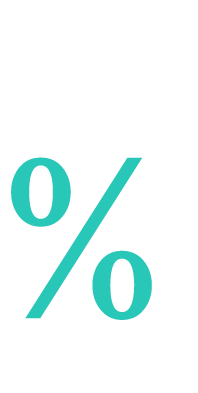

over target for CPD hours delivered
increase in CPD hours target
We are proud that the average satisfaction score has remained so high despite significantly expanding our CPD offering , delivering a broader range of events, reaching more advisers and providing greater depth across our educational content.
Webinars proved popular with the adviser community this year, and we produced a four-part video series on inheritance tax (IHT) that has been watched by hundreds of advisers. This format allows us to add sustained value, building on adviser feedback that they want accessible, high-quality content they can return to and share with their clients.
Community
Commitments for 2026-2027

Looking ahead, we commit to:
Undertaking a comprehensive review of our I&D strategy in the coming year, informed by industry trends, internal diversity statistics, and stakeholder feedback, to reassess our priorities. This will include maintaining I&D training at 100% of employees.

Continuing to promote the use of volunteering days, offering flexible volunteering options, and maintaining our long-standing charity partnerships with Hestia, The Conservation Volunteers, Little Village, Mencap, Equal People Mencap, Cook for Good and the Ambulance Service, whilst remaining open to exploring new partnerships.

Maintaining our customer satisfaction score above 4.0 out of 5 for Triple Point educational events.

Further tracking and implementing actions that arise from customer feedback, and monitoring their effectiveness over time.

Supporting our adviser community across the UK with education and training through CPD events; continuing to track the hours involved and maintaining our delivery of over 1,500 hours of CPD events.

Continuing to report the Sustainable Development Goal alignment of our charitable activities and our total charitable spend.
. Governance
Governance
Our approach
Robust governance embeds sustainability into all our decision-making, driving accountability and transparency
Good governance makes sure we do what we say. For sustainability, that means clear responsibility, proper oversight and an approach that keeps pace as our business and the wider context change. Above all, it means regularly testing whether this work continues to serve our clients and our purpose. This year we made progress on three fronts:
Responsible use of AI. We introduced a policy on the responsible use of artificial intelligence across the business, and began considering how the same thinking should apply to our investment strategies.
Oversight. We strengthened oversight of our sustainability activity with a refined monitoring programme and better feedback from the teams involved.
Accountability. We continued to link sustainability more closely to how performance is measured and rewarded, so it sits within how we deliver for clients rather than alongside it.
Governance
Last year’s commitments
Last year, we said we would implement a group approach to responsible use of artificial intelligence and further test and refine our sustainability position.
We committed to increasing oversight of our sustainability activity and to further enhancing the link between sustainability performance and remuneration.
Governance
This year’s outcomes
Developed responsible AI policy across the business
Implemented Triple Point AI Board
Deepened testing of our sustainability position
Strengthened oversight through refined monitoring
Enhancing the link between sustainability performance and remuneration
Additional outcome: Embedded mandatory sustainability induction for all new starters
Additional outcome: Formalised procurement and deepened sustainability engagement with suppliers

Governance
Developed responsible AI policy across the business
This year, the Sustainability team worked with the Digital & Technology and Compliance teams to develop a responsible AI policy that now covers employee use of artificial intelligence across Triple Point. The policy emphasises fair use that avoids bias in outputs and decision-making, appropriate human oversight and accountability, and alignment with Triple Point's values and standards. It includes guidance for teams with high exposure to AI risk in how to manage that exposure.
Triple Point has also instituted an AI Board responsible for the ongoing oversight of this policy, with both managing partners being members.
Our current policy covers employee use of AI tools – it does not yet extend to artificial intelligence in our deal due diligence. The extent to which AI may play a part in a company’s performance and the outcome of a deal is currently assessed on a deal-by-deal basis, with the support of the Sustainability Team. In the coming year, we will assess emerging practices and risks to ensure deal teams are supported in appropriately incorporating AI assessment in the due diligence process.
Governance
Deepened testing of our sustainability position
Our Sustainable Investment Subgroup (SISG) is where we test investment opportunities that raise questions of judgement. It helps us reach decisions that serve our clients’ long-term interests and reflect what we believe they expect of us.
The SISG was considerably busier this year. We held five formal sessions, up from two the previous year, and considered sectors we had not previously examined in detail, including aviation, land use change, hedge funds and motorsport. Sustainability considerations also featured in 39 other deal discussions, up from 30.
increase in formal SISG sessions
increase in informal SISG reviews
This broader range reflects changes in the UK economy. For example, the current geopolitical situation has increased demand for finance from businesses serving the defence sector. For opportunities like these, we apply enhanced due diligence, including assessment against our jurisdictional and human rights risk framework, as we would for any sector with specific risks of its own.
The SISG gives us a structured way to respond quickly as new questions arise, and to do so consistently, so that similar opportunities are judged by the same standards.
Governance
Strengthened oversight through refined monitoring
This year we ran our fourth annual ESG Monitoring Programme – a comprehensive review by the Sustainability team assessing each investment team’s alignment with their respective ESG integration policy. The results are communicated to the Sustainability Group, AIF Investment Committee, and the Group Risk and Compliance Committee which reports into the Management Committee, thus embedding sustainability oversight into core governance structures.

We introduced two significant improvements to the process this year:
1

Scoring
methodology
2

Survey of
Credit and Investment Committee members
1
methodology Scoring
First, we revised our scoring methodology to align with the Group Risk framework. We retained a measure of assessing innovation and opportunity, while aligning our effectiveness rating scale to the one used across the business for other risks, replacing the letter-based scoring system that was unique to the ESG process.
This change improves clarity and consistency.
2
Credit and Investment Survey of Committee members
Second, we introduced a survey of Credit and Investment Committee members, capturing their view on the quality of ESG analysis in deal papers, how this can be improved, progress made by teams compared to the previous year, and how the Sustainability team can best support investment teams in the coming year.
This deepens senior-level engagement with monitoring findings.
Sustainability Group attendance held at 68% across the year, compared with 65% the previous year. The Group continues to meet quarterly to review all sustainability activity and to feed into, approve or reject major decisions – including our NZAM signatory status and our updated net zero targets, which the Group approved before submission to the boards of the lending and leasing companies to which Triple Point provides investment management services.

Governance

Linking sustainability
to performance and reward
We want everyone who joins Triple Point to understand how sustainability connects to the way we invest and serve our clients. The sustainability induction, like all our in-person induction sessions, is now mandatory for new starters. Introducing an improved tracking system helped new joiners ensure they did not miss this required session.
As a result, 100% of new joiners now complete introductory sustainability training, up from 98% last year.
Additional outcome: sustainability induction now mandatory for all new starters
All employees are asked to reflect on sustainability in their annual review, including how it informs their work and what they have contributed over the year. How relevant this is, and in how much depth, naturally varies by role.
22 employees now have sustainability objectives directly linked to their remuneration, up from last year. This is partly because sustainability has been added to the job descriptions of our Management Committee. We will keep this approach under review, with the aim of making sustainability a natural part of how performance is judged and rewarded, rather than a separate measure.

100%
of Triple Point new joiners receive introductory sustainability training
Governance
Additional outcome: Formalised procurement and deepened sustainability engagement with suppliers
This year, Triple Point implemented a new procurement software system, centralising contract storage and negotiation. We refined our sustainability questionnaire for suppliers, scaling its depth to the value of the contract and embedding it as a standard step for all new procurements. All responses are reviewed by the Sustainability team, with any concerns or required follow-up flagged to the relevant procuring team.
We also continued to deepen engagement with suppliers more broadly, and especially with the building manager for our leased office facilities. This relationship has historically focused on environmental data - collecting waste, energy and water data over several years, as reported in previous sustainability reports - and this year we introduced six-monthly meetings to broaden the conversation to ESG topics such as modern slavery.

“Our imperative is to add value to Triple Point through sustainability activity. This is only possible because of the robust sustainability processes and governance we have developed, which provide the foundations from which we progress.”

Lindsay Smart Head of Sustainability & Product
Community
Commitments for 2026-2027
Looking ahead, we commit to:

Continuing to test and refine our sustainability position through SISG, deal team discussions, and engagement with emerging topics.

Continuing the implementation of a Group approach to responsible use of artificial intelligence, with focused development of the approach related to our investment activities and monitoring of our operations.

Further enhancing the link between sustainability performance and remuneration, with a view to broadening how sustainability objectives feed into reward structures across the business.

Continuing regular engagement with the building manager for our leased office, discussing ESG topics such as modern slavery and environmental practices.

Maintaining oversight of our sustainability activity through our annual monitoring programme with continued senior governance engagement to find opportunities to continually improve.
Strategy
Outcomes
Private Credit
Energy Transition & Clean Heat
Ventures
Private Credit
Private Credit
Our approach
The Private Credit and Sustainability teams work closely to enhance ESG integration across the lending and leasing businesses in which our Estate Planning services invest.
The Private Credit team, alongside the Energy and Housing teams, provides these businesses with origination, due diligence, and portfolio-management services.
We provide investment management services to independent lending and leasing businesses, and these businesses have adopted our recommended approach to ESG integration. Our role is thus to ensure that the businesses we support, and the borrowers they lend to, are aligned with our Responsible Investment Guide and our broader commitment to environmental, social and governance integrity.
On behalf of the lending and leasing businesses, our team works hard to identify businesses that recognise the need for more sustainable behaviours, and to reject deals that could result in negative outcomes for people or the planet.
This year, we continued to strengthen ESG integration in origination and monitoring, while supporting the lending businesses in their credit decision-making. We deepened our work with counterparties on climate commitments, identified engagement opportunities where we can add value, and increased our focus on how our supply chains reflect our sustainability principles. The ESG Champions network for Private Credit broadened engagement across teams: Champions are now engaged monthly, providing team-specific support, while quarterly sessions continue to focus on shared themes and cross-team learning.
scroll down
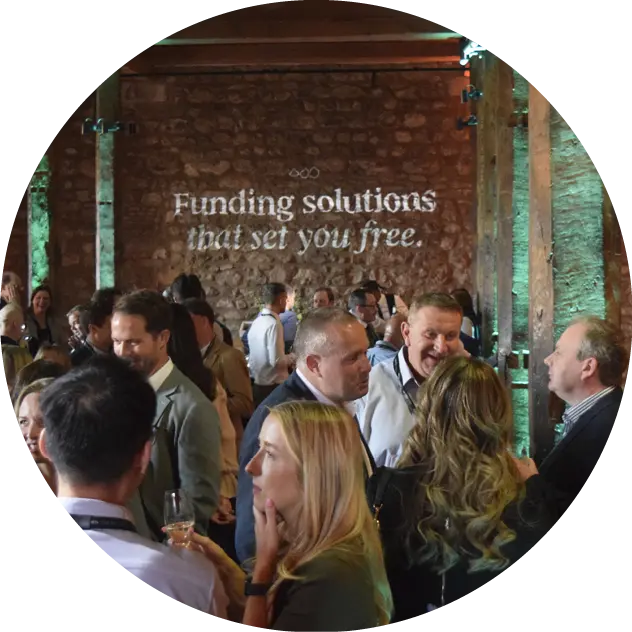

Private Credit Connect 2026
Besides creating jobs and boosting economic growth, our Private Credit team’s financing services can also contribute to a more sustainable future.
Private Credit
Last year’s commitments
Last year we said we would continue to track and report KPIs for businesses that receive loans through our managed lending and leasing businesses.
We committed to taking action to measure and monitor carbon emissions, including checking corporate clients’ net zero targets, and to continuing to explore ways to provide support to borrowers in managing and reporting their carbon footprint. We also said we would continue to guide businesses towards ambitious yet achievable emissions reduction goals and to maintain our commitment to supporting women-led businesses.
Private Credit
This year’s outcomes
Improved ESG KPI tracking, enhanced due diligence and portfolio monitoring
Enhanced carbon emissions tracking across corporate borrowers
Deployed AI tools to support sustainability analysis
Provided targeted sustainability engagement to borrowers
Embedded ESG clauses in facilities
Strengthened public sector procurement engagement
Recognised gap in women-led business support
Strengthened ESG discipline in deal selection
Private Credit
Improved ESG KPI tracking, enhanced due diligence and portfolio monitoring
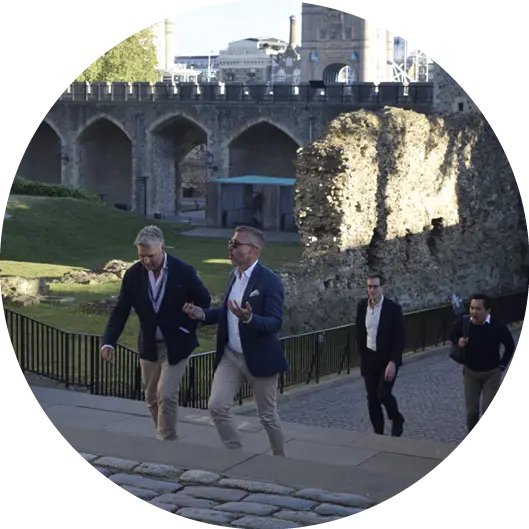


Private Credit Connect 2026
Tracking of ESG metrics improved in several ways this year. We refreshed our portfolio monitoring process and redefined what constitutes an ‘ESG flag’. This was followed by a whole portfolio review for our SME and Specialty Finance portfolios, which improved our proactive identification of modern slavery risk and our ability to identify borrowers approaching the revenue threshold at which they come into scope of modern slavery legislation.
Automated tracking of ESG KPIs is improving as our new origination system is adopted by the Private Credit team. ESG information - provided by counterparties or found in public sources – is now required to be entered into the system prior to credit approval, embedding sustainability data collection into the origination workflow.
We have also introduced better tracking of our Property Development portfolio. Information on Energy Performance Certificate (EPC) targets and achievements for schemes reaching practical completion is now reported quarterly. We have almost a full year of reporting complete, and this will be reported in the next sustainability report as it fulfils one of our climate commitments made as part of our net zero rebaselining and target refresh project.
Triple Point also manages a small portfolio of social housing assets, both directly and via the lending businesses Triple Point provides management services to. As part of the rebaselining project, we mapped all social housing assets to identify their EPC ratings. We used the government’s EPC register alongside this to establish the capital expenditure required to bring properties to a minimum of EPC C, in line with forthcoming minimum energy efficiency standards.
Towards the end of the reporting year, the Sustainability team launched a trial with the Property Development team to include specialist physical climate risk screening in their due diligence. Results gathered over the coming year will inform our longer-term approach to setting a guideline risk appetite for climate-related exposure in this asset class.
scroll down
Private Credit
Enhanced carbon emissions tracking across corporate borrowers
Work on enhanced carbon emissions tracking has continued throughout the year, with the net zero targets of corporate borrowers now recorded in credit papers, where available. Building on this foundation, our updated net zero targets will be accompanied by an implementation project to enhance data collection at origination, and on an annual basis for companies already in the portfolio. This will capture information on near- term and long-term net zero targets and track the reported year-on-year change in emissions against the reductions required to meet companies’ net zero targets. We do not yet have a whole portfolio view of targets and alignment, but our updated targets and enhanced implementation approach will provide this visibility going forward.
Deployed AI tools to support sustainability analysis
We are supporting the deal teams in gathering and interpreting sustainability data for their credit papers through purpose-built artificial intelligence tools. These tools are familiar with the Triple Point approach to sustainability, our policies and processes, and integrate our deal discussion log so that they can provide comprehensive and decision- useful sustainability support alongside direct support from the Sustainability team. This work represents meaningful progress in enabling a larger number of deals to be reviewed in depth, without compromising the essential input of human expertise in decision making. AI activity is carried out in line with our new AI policy.
Private Credit
Provided targeted sustainability engagement to borrowers
This year, the Sustainability team has increasingly encouraged the Private Credit team to proactively identify counterparties who could benefit from direct sustainability support, including carbon reporting, climate target approaches, and sustainability governance.
We had one significant positive engagement with an SME counterparty in the consulting sector, where we delivered structured ESG input with practical recommendations that were positively received by the company’s leadership. This counterparty’s primary customers include public sector bodies, which now include sustainability and social value considerations in their procurement processes. Our engagement demonstrated value by helping this company align its operations and reporting to these emerging public sector requirements. We are hoping that this approach can be replicated in the coming year.

“Given our familiarity with both private and public sector procurement processes and requirements, we believe we can add significant value when counterparties are open to engagement on sustainability issues.”

Toby Furnivall Managing Director – Private Credit
Private Credit
Embedded ESG clauses in facilities
For some facilities, we have explored and implemented ESG- related clauses which align borrower excluded sectors for their own customers to our Responsible Investment Guide. This includes avoiding thermal coal, tobacco, gambling, and other controversial sectors. This represents a concrete deepening of how we embed sustainability principles into lending terms.
Strengthened public sector procurement engagement
Triple Point supported the lending and leasing businesses we provide investment management services to in completing their first Evergreen and Modern Slavery Assessment Tool assessments, required by public sector leasing tender processes. This enabled continued access to public sector opportunities in lending and leasing.
The growing emphasis on sustainability credentials in public sector tendering reflects a broader and welcome shift towards embedding responsible business practices across supply chains. We support this direction of travel, recognising that raising the baseline expected of suppliers to public bodies such as the NHS helps lift standards across the wider market.
Private Credit
Recognised gap in women-led business support
Activity in this area was limited during the year due to capacity constraints within the team, and we recognise this represents a gap in our commitments. We are addressing this in two ways.
First, we continue to monitor female representation across our SME and Specialty Finance portfolios by tracking the number of companies with female directors or owners. The proportion of SME portfolio companies with female directors or owners has remained broadly stable year-on-year. The SME team has also introduced a broader measure this year, extending beyond formal directorship to include female talent in senior or business-critical roles (such as customer success directors and financial controllers). As at June 2026, 40% of the SME portfolio had at least one female director, owner, or woman in a senior or business-critical role.
Second, this data will inform how we support female leaders and talent going forward. In the coming year, we expect to hold portfolio dinners for female leaders and talent and will continue exploring the most effective way to organise networking events that support female leaders across our portfolio and introducer network.
Strengthened ESG discipline in deal selection
The number of deals rejected on ESG grounds increased from 10 in 2025 to 18 in 2026. This increase reflects a positive shift in how ESG is applied across deal teams rather than a deterioration in the pipeline. Deal teams are increasingly confident in declining deals from the outset where ESG credentials – most commonly governance-related – are not sufficiently strong. Teams are also more consistently recognising governance issues as ESG issues in their own right, rather than treating them solely as credit considerations. As a result, ESG grounds are being more accurately and more frequently cited as the basis for, or a contributing factor in, declining a deal.
Number of deals rejected on ESG grounds
10
18
in 2025
in 2026
Private Credit
A selection of this year’s transactions
This year, the Private Credit team arranged financing for a number of transactions reflecting our commitment to sustainable outcomes.
Public Sector
Solar panel installations on 41 new ambulances, contributing to the decarbonisation of emergency vehicle fleets.
Synthetic sports pitches for two Academy schools - one in Barnet and one in Walton - with strong social value (providing year-round sport facilities available to both school children and the local community).
Electric ambulances for driver training for an NHS Trust in the North West.
41 electric vans and two electric refuse collection vehicles for a local council in Wales.
Corporate
Direct lease of battery-powered generator units for a construction business, replacing diesel generators traditionally used on site.
Direct lease of an electric pressure washer for a waste management business, supporting the transition to lower-emission equipment.
A selection of this year’s transactions
SME
A senior debt facility supporting a private equity investment in an education sector business, providing teacher coaching and professional development across more than 2,900 schools.
Funding support for an energy-efficient lighting business, providing energy-efficient lighting solutions for UK healthcare and commercial settings, helping to reduce their environmental impact.
Funding for a collective of specialist businesses dedicated to delivering education-focused experiences to young people.
Private Credit
Commitments for 2026-2027
Looking ahead, we commit to:

Within our public sector activities, deepening our understanding and monitoring of upstream and downstream supply chains, with particular focus on exploring engagement with key actors downstream.

Implementing our new net zero targets across Corporate and SME activities, embedding data capture into origination, credit papers and annual reviews.

Strengthening sustainability capability within property development deals and continuing to strengthen how ESG risk and opportunity are evidenced through the deal review process, with a focus on gathering climate risk information and EPC data.

Continuing to explore ways to better support and engage female leaders and talent across our portfolio and network.
Continuing to prioritise data and information management across all teams, including further embedding ESG data capture into our origination system.
Continuing to identify opportunities for direct counterparty engagement and support across the lending books of the businesses to which we provide management services.

Building relationships with sector partners and supporting research or thought pieces that explore emerging themes in sustainability and finance.

Implementing our Energy net zero target, including the actions and portfolio-level monitoring needed to deliver against it, in line with our Net Zero Target Commitments.
ENERGY - ENERGY TRANSITION
We understand the importance of providing low-carbon energy solutions to help reduce carbon emissions and address the climate emergency.
Low-carbon energy is one of the clearest areas where long-term investment returns, lower costs for households and businesses, and a more resilient energy system point in the same direction. Investing in efficient, low-carbon infrastructure reduces waste, lowers energy bills and supports a more secure supply, and it gives our clients access to assets with long-term demand behind them.
Our energy investment is led by two teams: Energy Transition and Clean Heat.
Recent policy has given the sector greater long-term visibility. The Clean Power 2030 Action Plan sets more ambitious goals for renewables, grid flexibility and storage, alongside planning reforms that will also benefit heat network deployment.

The Great British Energy Act 2025 established a publicly owned company to invest in clean generation, and Ofgem has approved significant investment in electricity and gas networks to improve grid capacity and integration. Heat networks have also come under Ofgem regulation for the first time.
The government has confirmed multi-year funding for the Green Heat Network Fund until 2030 and, under the Warm Homes Plan, created the £5bn Warm Homes Fund. Together with a target to more than double the share of heat demand met by heat networks in England by 2035, this gives district heating schemes the long-term certainty that investment at scale depends on.


Energy transition
Whitelaw Brae wind farm. (Tweedsmuir, Scotland)
ENERGY - ENERGY TRANSITION
Our approach
We finance energy infrastructure that produces lower carbon emissions than the alternatives.
Our investment case rests on the economics. Demand for low-carbon generation, storage and grid capacity is growing, costs have fallen, and policy now gives long-term visibility. Together, these make well- structured energy infrastructure an attractive source of durable returns for our clients.
We work closely with developers, contractors and operators to manage environmental and social factors carefully and to measure the outcomes. Projects that bring real benefits to their local communities tend to win support more easily, face fewer delays and perform more reliably over their lifetime, so we treat community engagement as part of good investment practice.
This year, we deepened our engagement with project teams on the rationale for each investment, expanded how we track renewable energy output, and continued to confirm that every project has a clear approach to managing its sustainability risks. We also strengthened how we assess community engagement and track biodiversity commitments across our renewable energy portfolio.
ENERGY - ENERGY TRANSITION

Last year’s commitments
We said we would track renewable energy generated from our portfolio and confirm an energy transition rationale for every asset we back.
We committed to seeking and tracking evidence of good practice in community engagement across our financed projects, benchmarked against what would be expected for each project’s stage and scale. We also said we would track and report clean energy production and storage from our development finance portfolio, and that we would seek out and track Biodiversity Net Gain commitments that exceed minimum standards.

This year’s outcomes
Verified energy transition rationale across all deals
Tracked renewable energy capacity and avoided emissions
Deepened community engagement assessment
Strengthened Biodiversity Net Gain assessment and monitoring
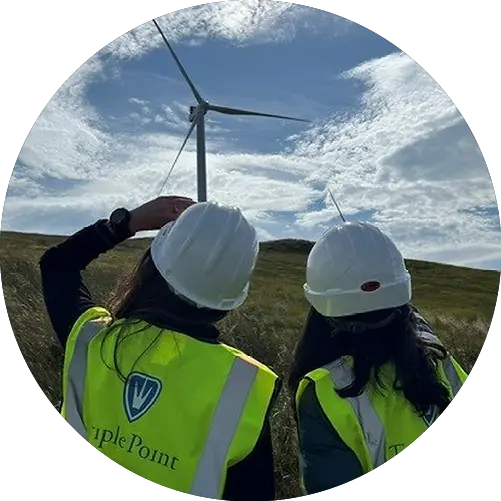
ENERGY - ENERGY TRANSITION
Verified energy transition rationale across all deals
This year, we embedded confirmation of each project’s energy transition rationale into our credit and investment process. During due diligence on each project, our investment team now provides detail on the energy transition rationale, explaining the role the project will have in the energy transition, including expected output such as renewable energy generation and what that means in the context of energy supply - for example, powering a defined number of homes.
Before due diligence is complete, our Sustainability team reviews the risks and opportunities, and we discuss whether additional due diligence is needed before the summary is written and shared with our Investment Committee.
Over the past year, we have held several of these due diligence discussions with the team and, where necessary, with project developers. These discussions have helped us confirm that the projects in question have a sound sustainability approach.
Tracked renewable energy capacity and avoided emissions
To date, we have no operational projects that generate renewable energy; our only operational projects are battery energy storage systems (BESS). All new facility agreements now require operational projects to report on avoided emissions where renewable energy is generated. Projects in development or construction estimate this impact - for example, a solar project currently under construction estimates approximately 4,660 tCO2e of carbon emissions avoided per year at full operation.
For our portfolio’s BESS and solar photovoltaic (PV)/BESS projects, we track capacity on a quarterly basis. Our 2026 portfolio comprises nine projects across several asset types and development phases: seven BESS, one solar, and one wind. Five projects are in development, one is in construction, and three are operational.
BESS capacity
Solar PV/BESS capacity
3,225 MW
5,086.9 MW
1,893 MW
910 MW
2025
2026
ENERGY - ENERGY TRANSITION
Deepened community engagement assessment
For each project we finance, we seek out and assess evidence of good practice in community engagement, benchmarked against what would be expected for the project’s stage and scale. Pre- financing, we review the project’s own consultation record - for example, evidence of meaningful two-way engagement with local communities, elected representatives and statutory consultees, and how feedback received has demonstrably shaped the final scheme design. Through construction and operation, we track how the project keeps stakeholders informed and engaged, rather than conducting this engagement ourselves.
We also look for the developer’s plans for a community benefit fund, including intended use of proceeds driven by community consultation and how proceeds are spent once the project is operational.

Strengthened Biodiversity Net Gain assessment and monitoring
During due diligence on each project, our investment team identifies the Biodiversity Net Gain (BNG) commitment and flags this in comparison to minimum requirements, stating whether the project will exceed what is required. Across all of our energy projects, we seek out and assess the BNG (or equivalent) commitments the project has in place, benchmarked against the applicable local standard. We look for evidence that these commitments go beyond compliance-only requirements, reviewing measurable habitat enhancements set out in the project’s Biodiversity Management Plan and Landscape and Ecological Management Plan.
We track how these commitments are implemented and verified through the project lifecycle - from pre-construction ecological assessment, through delivery and ongoing operation and maintenance, where habitat condition is monitored against the project’s agreed targets and reported back to us as. For example, a solar project in our portfolio has committed to approximately 70% BNG - seven times the 10% minimum requirement - delivered on-site through measures such as new native hedgerows, the creation of species-rich grasslands on former arable land, and habitat features such as bat and bird boxes and hedgehog igloos.
ENERGY - ENERGY TRANSITION
Commitments for 2026-2027

Looking ahead, we commit to:
Continuing to assess community engagement across all energy investments, identifying and prioritising community benefit, and continuing to seek out and track evidence of good practice, benchmarked against what would be expected for each project’s stage and scale.

Continuing to verify energy transition rationale across all new deals, maintaining discipline in our capital allocation and ensuring alignment with our decarbonisation objectives.


Continuing to seek out, assess and monitor Biodiversity Net Gain commitments across our portfolio, and checking that developers’ commitments exceed the applicable minimum requirements.

Implementing our Energy net zero target, including the actions and portfolio-level monitoring needed to deliver against it, in line with our net zero target commitments.

Developing a portfolio ESG monitoring framework covering our core metrics and broader project-level ESG information, and using the data to generate insights, identify areas for engagement and inform portfolio-level decision-making.
ENERGY - CLEAN HEAT
Our approach
We finance heat networks - clean heating and cooling infrastructure that can displace fossil fuel heating and reduce carbon emissions in the built environment.
Our role is to support the development and scaling of heat networks across the UK whilst ensuring that projects deliver social and economic benefits alongside environmental outcomes. We work with project developers to build supply chain capability, promote best practice in diversity and inclusion, support workforce development, and tackle economic inequality through our investment activities.
This year, we continued to scale the Green Heat Network Fund (GHNF), expanded our support for workforce development and economic opportunity, and strengthened our commitment to carbon literacy across the heat networks sector.

ENERGY - CLEAN HEAT
Last year’s commitments
We said we would increase the capacity and capability of the supply chain by ensuring compliance with the GHNF Market Transformation Commitments and highlight the social and economic benefits of the projects in which we invest.
We committed to supporting equal opportunities through the promotion of best practices in inclusion and diversity across the heat networks sector, providing 10 hours of teaching, training and mentoring per quarter. We also committed to supporting the development, recruitment and retention of a carbon-literate workforce to tackle economic inequality through teaching, training and mentoring interventions with a minimum of 10 hours of teaching, training and mentoring per quarter. Finally, we committed to monitoring air quality prior to, during and post-completion of heat network development in locations where we provided funding.

“We believe that the energy transition must be inclusive and deliver equal opportunities, not merely environmental benefits.”

Ken Hunnisett, Head of Clean Heat
ENERGY - CLEAN HEAT
This year’s outcomes
Scaled Green Heat Network Fund (GHNF) with enhanced job and apprenticeship commitments
The total number of GHNF schemes awarded funding has risen to 90, with an estimated annual carbon saving of 821,603 tonnes of CO equivalent, covering 118,698 residential connections and 2,522 2 non-residential connections. This represents a 125% expansion from the 40 schemes supported in 2025, with estimated annual emissions savings of 218,778 tonnes of CO₂ equivalent.
Beyond carbon impact, GHNF is creating meaningful economic opportunity. Projects selected for GHNF investment have committed to creating a total of 13,148 full-time equivalent (FTE) job years over the life of the projects, as well as 582 apprenticeships. For example, one London development was awarded GHNF funding in Round 10 and aims to create 201 FTE job years, 80 of which will be local and the majority during construction.
Total annual emissions saving in tCO e 2
Total annual carbon saving in tCO e 2







Committed to support
Committed to create


apprenticeships
full-time equivalent (FTE) job years
It also expects to create 16 apprenticeship positions, including 12 that are likely to convert into long-term employment opportunities. Although most GHNF projects remain in early phases of development, funded projects have already reported creating 217 FTE jobs and 80 apprenticeships. This demonstrates the programme’s real-world contribution to job creation and skills development in regions across the UK.
ENERGY - CLEAN HEAT
Advanced inclusion and diversity support across the heat networks sector
Last year, the team committed to dedicating 10 hours per quarter to support equal opportunities through the promotion of best practices in inclusion and diversity across the heat networks sector. The team exceeded this commitment in every quarter, delivering 66.5 hours in total over the year - 9 hours more than the previous year’s 57.5 hours. This sustained engagement reflects our conviction that the energy transition must be inclusive and that the heat networks sector must actively work to advance diversity and equal opportunities.
Hours in total over the year
66.5
hours
57.5
hours
2025
2026
Built carbon literacy capability across team
This year, the Clean Heat team and two additional colleagues – 8 people in total – underwent a one-day, in-person Carbon Literacy training course delivered by an external provider, Plans with Purpose, accredited by the Carbon Literacy Project. Upon completion, attendees received a Carbon Literacy Certificate. Following the training, the team held a dedicated follow- up session at which each team member set themselves a personal goal on climate action to take away and implement. This investment in people is integral to ensuring that our Clean Heat team has the skills and mindset to support heat network development at pace and with rigor.
ENERGY - CLEAN HEAT
Expanded economic inequality support and mentoring
Last year, the team committed to providing 10 hours of teaching, training and mentoring per quarter to help tackle economic inequality. The team exceeded this commitment in every quarter, delivering 79.5 hours in total over the year - 23.5 hours more than the previous year’s 56 hours.
For example, three members of the Clean Heat team supported the Heat Exchanger Mentoring Programme (HEMP), a UK industry scheme that pairs mentors and mentees to support professional development across the heat networks sector.
This work is reflective of our belief that the energy transition must deliver equal opportunities, not merely environmental benefits.
We also engaged with project developers and supply chain partners on issues of fair pay, skills development and support for underrepresented groups.
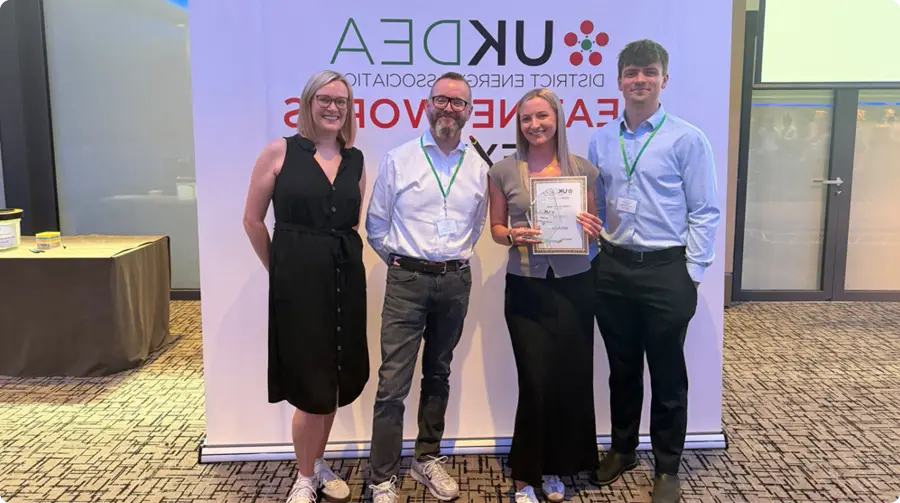
London, The 2026 UK District Energy Association (UKDEA) Awards
Commenced air quality monitoring methodology development
We are currently working with one of the delivery partners under the GHNF contract to develop a bespoke and appropriate methodology for monitoring air quality prior, during and after heat network development. This emerging work reflects our recognition that heat network deployment delivers co-benefits alongside carbon reduction, particularly in areas where air quality is a significant public health concern.
ENERGY - ENERGY TRANSITION
Commitments for 2026-2027

Looking ahead, we commit to:
Continuing to scale the Green Heat Network Fund whilst maintaining rigorous oversight of carbon and job outcomes, and embedding learning from our current portfolio into future programme design.

Continuing to support inclusion and diversity best practice across the heat networks sector, maintaining a minimum of 10 hours of teaching, training and mentoring per quarter, with sustained engagement with project developers and supply chain partners on equitable workforce development.

Strengthening our economic opportunity and mentoring initiatives, maintaining a minimum of 10 hours per quarter of teaching, training and mentoring, with continued focus on fair pay, skills development and inclusive career progression across the heat networks supply chain.

Completing and implementing our air quality monitoring methodology, beginning to capture and report co-benefits of heat network deployment across our portfolio.
Ventures
. Ventures
Triple Point offsite
ventures
Our approach
The Ventures team is focused on identifying early-stage innovation, and investing in business-to-business software-as-a-service companies that provide tech-based solutions to drive the growth of larger businesses.
This year, we continued to extend support to portfolio companies in developing sustainability principles and practices. We have focused on companies addressing pressing health needs and have continued to track sustainable attributes within our portfolio.
Our three new health investments this year demonstrate our conviction that technological innovation can address significant health needs at scale. We have also strengthened how we track sustainable attributes, including through our ESG Highlights tool and by tracking software governance certifications, and have continued to support founder wellbeing from due diligence through to post-investment.
ventures
Other key considerations
The Ventures team integrates sustainability considerations into its pre-investment due diligence process to identify companies with high growth potential and a strong commitment to responsible business practices. Given the early-stage nature of its investments, the team seeks to foster a sustainability mindset rather than impose rigid requirements.
By participating in industry forums and discussions, the team stays abreast of emerging ESG best practices and considers how to apply these principles to its seed-stage portfolio companies.
The goal is to contribute to the development of a more sustainable venture-capital ecosystem.
The Impact EIS Fund is now both closed and fully deployed. The team continues to oversee the investments and report to investors, but exposure and holdings are expected to fall over time through dilution and initial public offerings. This will reduce the team’s ability to influence company practices. In this context, the Ventures team continues to apply responsible ownership and exit practices, with support from our Sustainability team.

The two products (Venture VCT and Impact EIS) managed by the Ventures team have Consumer-Facing Disclosures, pertaining to the Sustainability Disclosure Requirements (SDR), which are available on the Triple Point website. The Venture VCT does not have a sustainability label.
The Impact EIS has a Sustainable Impact label.

ventures
Last year’s commitments
We said we would continue to extend support to portfolio companies in developing sustainability principles and practices.
We committed to continuing to improve tracking of sustainable attributes within the companies we back, focusing on factors most relevant to each company. We also said we would continue to take account of founder wellbeing while being more mindful of the specific challenges facing female founders. Finally, we committed to implementing specialist unconscious bias training for the team.
ventures
This year’s outcomes
Extended support to portfolio companies on sustainability principles
Improved tracking of sustainable attributes
Continued founder wellbeing support
Unconscious bias training
BETT EdTech conference with Ventures portfolio company Chalkie
ventures
Extended support to portfolio companies on sustainability principles
We have continued to direct capital towards companies addressing pressing health needs. This year, we made three new health investments:



BIOS Life
Asterix Health
Peak
BIOS Life,
an AI-powered, biomedically individualised oncology surveillance platform combining genomic and clinical risk data to personalise cancer screening and survivorship care for at-risk and post-treatment patients.
Asterix Health,
a tech-enabled clinical services provider that deploys regulated foreign-based doctors remotely into UK primary care and clinical admin roles, addressing the NHS’s structural GP capacity shortfall.
Peak (Newmode Health Group),
an AI-assisted preventative healthcare concierge pairing comprehensive blood diagnostics with ongoing AI-drafted clinical, PT and nutritionist guidance for a self-pay subscriber base.
ventures
Improved tracking of sustainable attributes
This year, we have begun development of a process within our enterprise AI tool to support the drafting of ESG Highlights sections for Ventures Investment Committee papers.
We also began tracking software governance certifications - such as ISO 27001 and SOC 2 - held by new software portfolio company investments, which make up the majority of our portfolio. These certifications signal security and governance maturity and are widely used as a proxy for enterprise sales readiness, since many enterprise customers require them before signing a contract, providing a useful measure of how commercially ready a company is to scale.

Continued founder wellbeing support
At the due diligence stage, we ask founders to complete a wellbeing self-assessment, helping us understand where additional support may be valuable. Post investment, we hold regular check-ins with a focus on monitoring stress levels and encouraging breaks and time off as needed.
We aim to be attentive to the different pressures founders may face, including those specific to female founders , should any needs be raised by the founders themselves.
Unconscious bias training
One member of the team is trained in unconscious bias, and inclusive practices are embedded into the way the team interacts with founders. In light of this, formal training across the whole team was not rolled out.
ventures
Commitments for 2026-2027
Looking ahead, we commit to:

Build on the ESG analysis of prospective investments, setting out each company’s ESG risks and mitigations alongside its strengths and positive impact.

Continue to support companies in the health and climate space where technology can deliver a positive impact.

Map our portfolio companies against the UN SDGs where there is strong evidence of a positive or negative link, to show the impact of the Ventures portfolio.
looking ahead
Closing thoughts and our objectives for 2027
This is our fourth Blue Book. It describes a year of progress, a few shortfalls, and continued economic and political uncertainty.
Our approach remains unchanged. Sustainability matters to us because it helps us fulfil our purpose: unlocking financial ambition with curiosity and character.
Curiosity encourages us to look beyond the obvious, helping us better understand risks and recognise opportunities that might otherwise be missed. Character guides how we act. We do what we say we will and are open about where we can do better. Many of our clients invest with the next generation in mind. Balancing the needs of today with those of the future is therefore not an abstract principle for us. It is central to the trust they place in us.

looking ahead
Business activity focus areas
Summary of progress over the year:
Across the four areas of business activity monitored (People, Climate and Nature, Community and Governance), we achieved 100% of the 21 commitments we made last year. These covered topics such as learning and development, employee engagement, early careers, climate transition planning and data quality, and responsible use of artificial intelligence We also worked on projects outside the commitments made last year, such as refining our procurement sustainability questionnaire, which is now a standard step in all procurements, and deepening our engagement with one of our main suppliers.
Meeting these commitments does not mean the work is finished. Our focus areas for the year ahead build on this progress by continuing to invest in our people’s development, by working to make Triple Point a more inclusive workplace, and by delivering against our net zero targets.
Summary of progress over the year:
Focus for the year ahead:
Developing our people through a clearer career framework, targeted learning through Triple Point Academy and a Manager Capability Framework, to support our high-performance culture, aligned with SDG 4: Quality Education and SDG 8: Decent Work and Economic Growth.
Creating a more inclusive workplace, with a focus on female representation at senior levels through gender- balanced shortlists and a review of our inclusion and diversity strategy, aligned with SDG 5: Gender Equality and SDG 10: Reduced Inequalities.
Implementing our updated net zero targets and acting on the findings of our climate risk assessment, aligned with SDG 13: Climate Action.


looking ahead
Investment activity focus areas
Summary of progress over the year:
Across the three areas of investment activity monitored (Private Credit, Energy and Clean Heat, and Ventures), 58% (11/19) of the commitments we made last year were achieved, with 37% (7/19) partially achieved and one commitment not achieved. Going forward, we will introduce regular check-ins with teams across the business to monitor progress, identify barriers and agree corrective action, in order to reduce the chance of commitments not being met. We remain committed to completing the outstanding commitments in the coming year, except for two that have become redundant and two others around counterparty support on decarbonisation, which have been merged and taken forward as a single commitment. These changes better reflect the evolution of our activities to support counterparties on climate topics, and also on other sustainability issues that warrant the same attention.
Summary of progress over the year:
Focus for the year ahead:
Implementing our updated net zero targets across Corporate and SME Lending and Energy, and building physical climate risk information into property development deals, aligned with SDG 13: Climate Action.
Continuing to scale our clean energy and heat network investment and measuring the benefits for the communities around them, including through air quality monitoring and community engagement, aligned with SDG 7: Affordable and Clean Energy, SDG 9: Industry, Innovation and Infrastructure and SDG 11: Sustainable Cities and Communities.
Deepening our understanding of supply chains in our public sector activities and engaging directly with market participants on sustainability, aligned with SDG 12: Responsible Consumption and Production.
appendix
List of signatories 1/4
Certified B Corp
Connecting like-minded businesses to build a more inclusive and sustainable economy.
Recertified in 2025 with a higher score of 113.
PRI
Finance industry collaboration to drive responsible investment.
Signatories since 2019.
Net Zero Asset Managers Initiative
An international group of asset managers committed to supporting the goal of net zero greenhouse gas emissions.
Signatories since 2022.
PCAF
Enabling financial institutions to assess and disclose greenhouse gas emissions associated with financial activities.
Signatories since 2022.
appendix
List of signatories 2/4

Diversity Project
A cross-company initiative championing a diverse, equitable and inclusive UK investment and savings industry.
Members since 2020.
Living Wage
Voluntarily taking a stand to ensure their employees can earn a wage which is enough to live on.
Accredited since 2021.

Heart of the city
Members since 2019. Supporting leaders across the city to kick- start their responsible and sustainable business journeys.
Members since 2019.
World Benchmarking Alliance
Building a movement to measure and incentivise business impact towards a sustainable future that works for everyone.
Members since 2021.
appendix
List of signatories 3/4


TCFD
Task Force on Climate-related Financial Disclosures (TCFD) to improve and increase reporting of climate-related financial information.
Public supporters since 2021.
The Paris Agreement
International treaty on climate change adopted by 195 Parties at the UN Climate Change Conference (COP21).
Public supporters since 2021.

Global Investor Statement
The Global Investor Statement to Governments on the Climate Crisis, representing nearly USD 29 trillion in assets under management seeking to collectively demonstrate the finance industry’s support for government action on climate change.
Signatories since 2021.
GAIN
Providing opportunities for girls to consider a career in investment management.
Participating since 2021.
appendix
List of signatories 4/4

Black Interns
Where Black students and graduates realise their potential with paid internships across finance, technology and 25+ other sectors.
Participating since 2020.
Investing in Women Code
A commitment backed by the UK Government to support the advancement of women entrepreneurs in the UK by improving access to the tools, resources and finance they need to achieve their goals.
Signatory since 2024.
appendix
Key Performance Indicators
Please see below the full KPI tables for each topic.


People
Climate
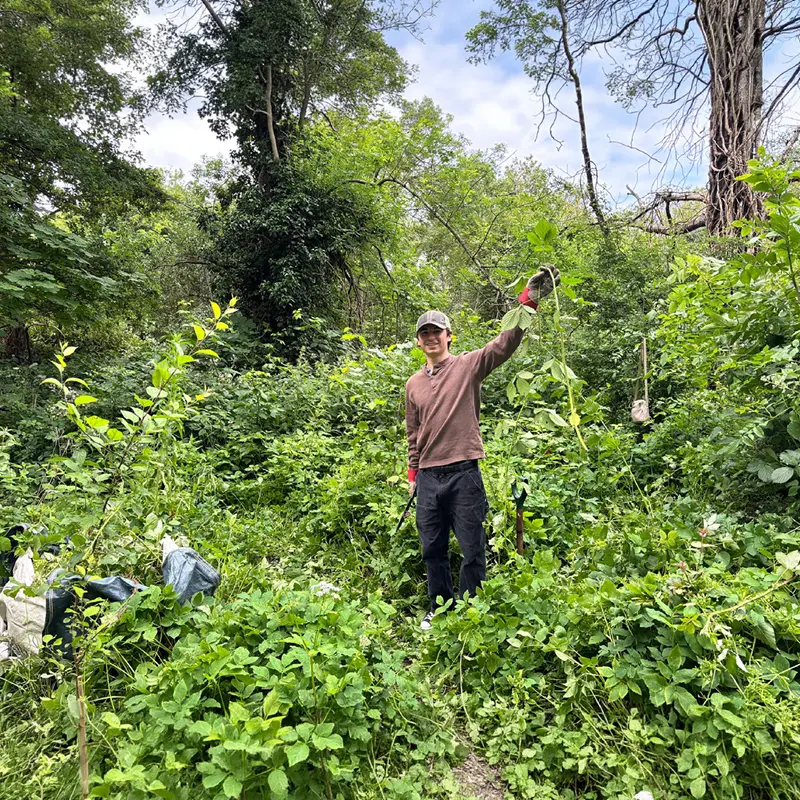
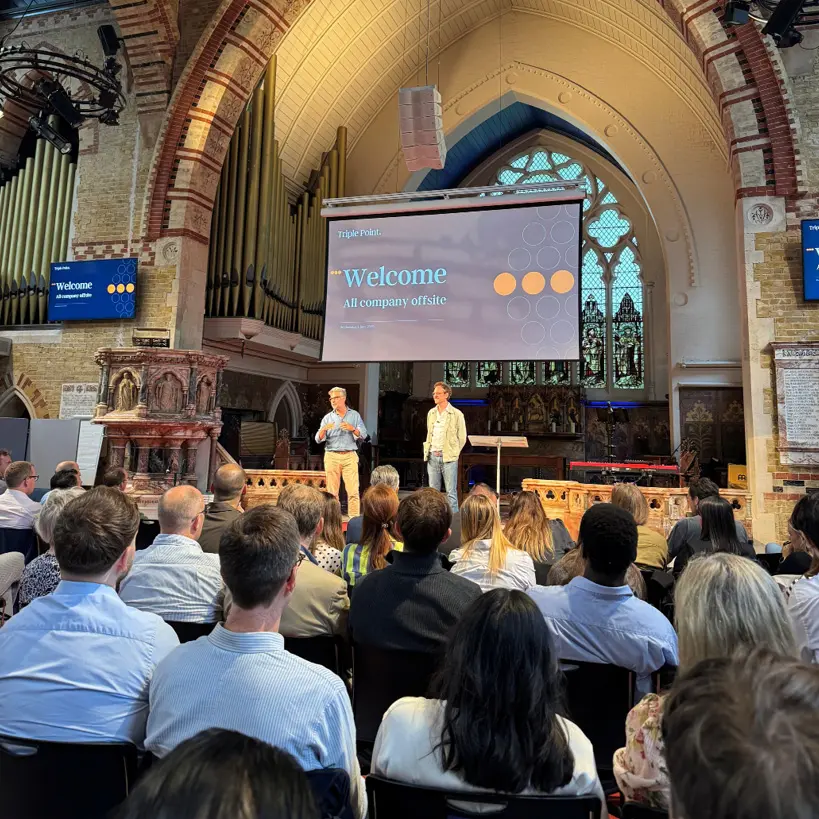
Community
Governance